
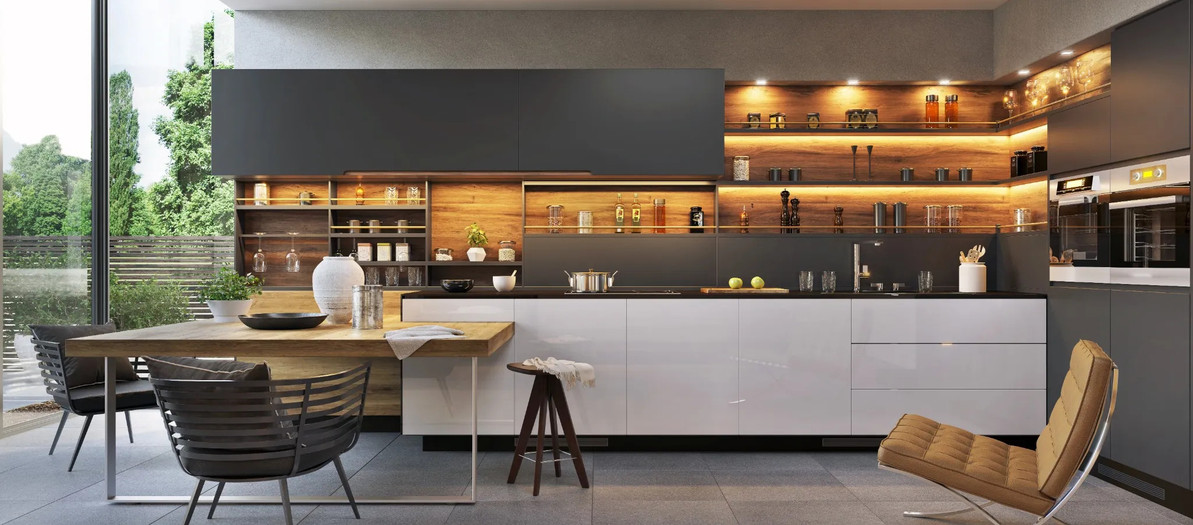
Why LED Strips Are Perfect for Cabinet Lighting | Volka
Why LED Strips Are Perfect for Cabinet Lighting

Cabinet lighting used to mean bulky fluorescent tubes, chunky puck lights, or miniature halogen spots that ran hot and burned out fast. None of them fit neatly into modern joinery, none of them delivered an even wash of light, and most of them required awkward cutouts and visible wiring. LED strip lighting changed all of that. A flexible strip roughly the thickness of a credit card now does more than every cabinet lighting technology that came before it, with a fraction of the heat, power draw, and installation hassle.
This guide covers exactly why LED strips are the correct choice for kitchen cabinets, walk-in wardrobes, display cabinets, bathroom vanities, and custom joinery. You will learn how they compare to the alternatives, which cabinet applications they excel in, how to pair them with the right aluminium profile and sensor, and how to avoid the three mistakes that ruin most DIY cabinet lighting jobs.
LED Strips vs Pucks, Fluoros and Linear Bars
Before looking at why LED strips dominate cabinetry, it helps to understand what they replaced. Cabinet makers have been fitting lights into joinery for decades, and the history of those attempts is a history of compromise.
Puck lights were the go-to for under-cabinet task lighting throughout the 1990s and 2000s. They provided a pool of bright light, but they created the classic "scallop" effect: bright circles directly under each puck separated by dark valleys. If you wanted an even wash, you had to space pucks every 200mm and run a ring of cabling between each one. The result was hot, patchy, and ugly.
Fluorescent tubes offered a more even light but came with a laundry list of problems: visible ballasts, a minimum tube length that rarely matched the cabinet width, a flickering warm-up period, mercury content, and a lifespan that capped around 10,000 hours. They also ran at a temperature that made sealed cabinet applications risky.
Linear halogen or xenon bars were the premium option in luxury joinery. They looked smart but ran extremely hot (a serious concern inside a closed wardrobe holding natural fibres), consumed significant power, and burned through bulbs every 2,000 to 4,000 hours.
Modern LED strip lighting solves every one of these problems simultaneously. A quality 24V LED strip will run for 50,000 hours or more, draw roughly 10 to 15 watts per metre, stay barely warm to the touch, and deliver a completely continuous line of light. That is the short version. The rest of this guide explains exactly how and why, and which products at Volka Lighting are built for cabinetry.
Reason 1: They Run Cool Enough for Enclosed Joinery

Heat is the single biggest reason older lighting technologies were unsuitable for cabinetry. A cabinet is, by definition, an enclosed or semi-enclosed space. That means any heat the light source generates has nowhere to go. Halogens and incandescent bulbs could easily reach surface temperatures above 200 degrees Celsius, which is enough to scorch timber veneers, warp melamine, damage natural fibre clothing, and even melt the adhesive backing off laminates.
A properly heatsinked LED strip running inside an aluminium profile stays under 50 degrees Celsius at the strip surface even during continuous operation. You can place hanging garments, leather goods, timber breadboards, or stored linens directly adjacent to a strip without any risk of thermal damage. For kitchen applications, you can safely mount LED strips directly under timber cabinet boxes above ovens and cooktops without concern about added heat stress on the joinery.
This single property opens up cabinet lighting applications that were impossible twenty years ago: illuminated drawer interiors, backlit glass shelves, lit wardrobe hanging spaces, and integrated toe-kick lighting under kitchen cabinetry.
Reason 2: They Fit Where Nothing Else Can
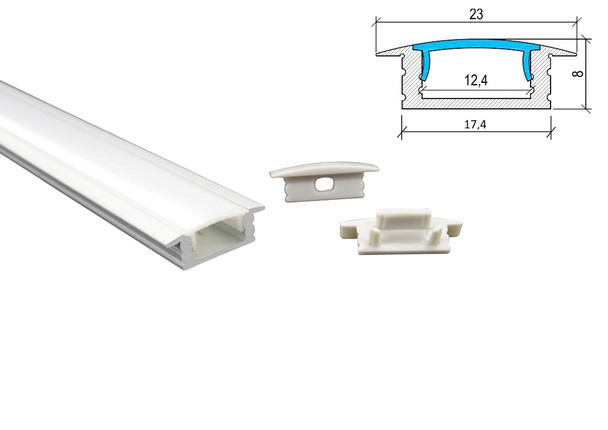
A modern LED strip is approximately 10mm wide and under 2mm thick. That is thinner than a standard veneer. When mounted inside a shallow aluminium channel like our PA-20 Recessed Slim Profile, the entire finished assembly sits under 7mm deep. That is critical because modern cabinetry rarely leaves spare real estate for lighting. Kitchen overhead cabinets often have bulkheads with less than 15mm of clearance, and wardrobe top rails routinely need to hide the light source behind a 10mm reveal.

This is where recessed profiles change the game. Cabinet makers working with Volka regularly route a channel directly into the underside of a cabinet box or into the edge of a floating shelf, drop in a PA-06 Recessed Profile, click in the strip, and snap the diffuser over the top. The finished result is completely flush with the surrounding timber or MDF. No visible channel, no shadows, no bulk. The light appears to come from nowhere, which is exactly the premium look modern joinery is chasing.
Surface-mounted puck lights, xenon bars, and linear fluorescents simply cannot compete with this. They all protrude by at least 15mm to 25mm, which means they either hang below the cabinet face or require a full bulkhead to hide. LED strips eliminate that compromise entirely.
Reason 3: Dotless Light Across Every Surface
The biggest complaint homeowners have about their first LED strip installation is the dreaded dotted look: individual points of light reflecting off a gloss splashback or stone benchtop instead of a smooth wash. That is a real problem with standard SMD strips when they are paired with shallow cabinet profiles and thin diffusers.

The solution is to specify a dotless strip technology from the start. Our SmoothLine (DOB) LED strip achieves this by pouring a continuous layer of silicone diffusion directly over the underlying SMD chips. The light is scattered and blended before it ever leaves the strip, so no matter how shallow the aluminium profile or how thin the diffuser, the output is a perfect unbroken line. Our COB Dotless Strip achieves the same result using hundreds of bare crystalline chips under a continuous phosphor silicone coat.
For cabinet lighting, especially over polished stone, gloss laminate, or mirrored backs, dotless technology is non-negotiable. The entire point of cabinet lighting is to make the surface below look beautiful, and a dotted reflection ruins that instantly. If you want a deeper comparison of the three strip technologies, our SMD vs COB vs DOB guide walks through exactly where each one fits.
Reason 4: Cut to Any Cabinet Width You Need
Cabinet widths are rarely standard. Every custom kitchen, wardrobe, and display piece has its own millimetre measurements, and nothing ruins a lighting job faster than a strip that is 40mm too short or 60mm too long. Traditional fixed-length fluorescent tubes and linear bars could never accommodate this reality. You were forced to pick the closest standard length and live with the mismatch.
LED strips solve this problem by design. Every quality strip has visible cut marks along its length, typically every 50mm on 12V strips and every 100mm on 24V strips. You simply measure the cabinet, cut the strip with a pair of scissors at the nearest mark, and fit it in place. For applications where even a 50mm increment is too coarse (think narrow pantry drawers or custom display niches), our Free-Cut SmoothLine Strip can be cut at any point along its length, giving you absolute millimetre precision.
This flexibility is exactly why every cabinet-specific quote we prepare uses LED strip as the core light source. We can match any joinery specification down to the exact rail measurement without compromise. The same principle applies to the aluminium profile: our PA-06 and PA-20 extrusions are supplied in standard lengths that cabinet makers simply cut down to match the exact cabinet width on site, alongside the strip itself.
Reason 5: Aluminium Profiles Hide the Hardware

A bare LED strip stuck to the underside of a cabinet looks like exactly what it is: a piece of tape. The professional finish that separates high-end joinery from DIY comes from mounting every strip inside an aluminium profile. Profiles do three critical jobs at once.
They act as a heat sink. Aluminium pulls heat away from the strip and dissipates it across the full length of the extrusion, which extends LED lifespan from around 20,000 hours (unmounted) to 50,000 hours or more (properly heatsunk).
They hide the strip. Recessed profiles like the PA-06 and PA-20 disappear flush into the joinery, so the only thing you see is a soft line of light emerging from the cabinet face.
They protect the strip. The aluminium body and polycarbonate diffuser shield the strip from knocks, dust, grease (critical in kitchens), and physical contact with stored items.
For cabinet applications we most often specify the PA-06 for a fully recessed flush finish, and the PA-20 where a slimmer footprint is needed or the cabinet material is too thin for a deeper cut. The PA-06 is available in three standard anodised finishes: silver, white, and black. The PA-20 comes in a silver anodised finish as standard.
For cabinetry that falls outside those standard finishes, Volka works directly with a specialist powder coating business to colour-match profiles to any specification. Whether your joinery is a deep forest green, a warm charcoal, a two-pack spray finish, or a precise Dulux or Resene colour match, we can have the profiles powder coated to match before they leave the workshop. The result is a lighting channel that disappears completely into the cabinet face with no visible contrast. Just mention the colour or paint code when you fill out a cabinet quote and we will arrange the custom finish as part of the project.
Pro tip: For kitchen cabinetry with a bespoke spray finish, always arrange profile colour matching before installation. Painting or touching up an installed aluminium profile after the fact is difficult and rarely looks as clean as a factory powder coat applied before fitting.
Reason 6: Automatic Sensor Activation
One of the most underrated advantages of LED strip lighting in cabinetry is how cleanly it integrates with low-voltage sensors. Because the strip runs on 12V or 24V DC, you can wire an inline sensor between the driver and the strip without touching mains voltage. That opens up three cabinet activation options, each suited to a different application.
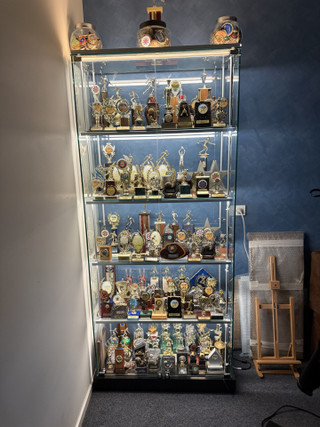
Door-activated sensors turn the strip on the instant a cabinet door or drawer opens, then switch it off when the door closes. This is the classic wardrobe and kitchen pantry setup. At Volka we supply the Cabinet IR Door-Activated Switch, which senses the change when the door swings open and triggers the strip automatically. No wall switch, no remote, no fiddling with controls.
PIR motion sensors detect movement in front of the cabinet and light it up as you walk past. This is the right choice for walk-in wardrobes, open shelving, and large display cabinets where opening a door is not part of the interaction. Our PIR Motion Sensor with Adjustable Time Settings lets you dial in how long the light stays on after motion stops, from 10 seconds up to several minutes.
Hand-wave IR sensors activate when you pass your hand within a few centimetres of the detector. These are popular under kitchen overhead cabinets because you can turn task lighting on and off without touching a dirty switch while cooking. The Hand-Wave IR Sensor Switch fits inline and needs no extra wiring beyond the strip feed.
Which sensor should you use? Door-activated sensors for enclosed cabinets and drawers (wardrobe, pantry, vanity). PIR motion sensors for walk-in spaces and large open shelving. Hand-wave sensors for kitchen task lighting where hands are often busy or messy. You can also combine a sensor with a manual override switch for flexibility. Browse the full sensor and controller range for cabinet-specific options.
Reason 7: 12V or 24V Flexibility
Both 12V and 24V LED strips are valid choices for cabinetry, and picking the right one is entirely about the length of run you are lighting.
12V strips are the workhorse for small to medium cabinet installs. A single 12V run can comfortably reach 5 to 6 metres before voltage drop starts to dim the far end. That covers the vast majority of kitchen under-cabinet jobs, wardrobe shelving, bathroom vanity interiors, and individual display cabinets. 12V drivers are also smaller, cheaper, and easier to hide inside cabinet carcasses or behind kickboards. For a typical 3 to 5 metre cabinet run, the Snappy 30W 12V driver is a great compact option.
24V strips come into their own for longer runs and multi-cabinet installations. The higher voltage means lower current draw along the strip, which translates directly into less voltage drop and longer continuous runs before brightness dips at the far end. A single 24V SmoothLine run can push 10 metres or more without visible drop-off. If you are lighting an entire kitchen perimeter, a wall of wardrobes, or a series of linked display cabinets in a commercial showroom, 24V is the right call. The Snappy 75W 24V driver handles most residential cabinet projects comfortably.
Quick rule of thumb: Under 4 metres of total strip? Use 12V. Over 4 metres or multiple linked cabinets? Use 24V. Over 10 metres on a single circuit? Still use 24V but plan for mid-point power injection. The Volka team sizes drivers and plans injection points for every cabinet quote we prepare, so if you are unsure, send us your measurements and we will spec it.
Where to Use LED Strips in Cabinetry
LED strip lighting belongs in almost every cabinet type. Here are the applications we spec most often for Australian residential and commercial projects.
| Application | Recommended Strip | Best Sensor Option |
|---|---|---|
| Kitchen under-cabinet task lighting | SmoothLine 24V (dotless over stone) | Hand-wave switch |
| Kitchen overhead / toe kick | SmoothLine 12V or 24V | Wall switch or hand-wave |
| Walk-in wardrobe | CCT SmoothLine (tunable white) | PIR motion sensor |
| Wardrobe drawers and shelves | SmoothLine 12V | Door-activated IR switch |
| Glass display cabinets | COB Dotless Strip (edge-lit glass) | Door-activated or manual |
| Pantry and internal cupboards | SmoothLine 12V | Door-activated IR switch |
| Bathroom vanity cabinetry | CCT SmoothLine (mood tuning) | PIR or manual |
| Commercial retail display | SmoothLine 24V (long runs) | Scheduled timer or BMS |
The CCT Multi-White SmoothLine is particularly popular for wardrobes and bathroom vanities because it lets you tune between a warm white for ambience and a cool white for accurate colour matching when picking out clothes or applying makeup. A single strip covers both moods.
Three Mistakes to Avoid
After specifying LED strip lighting for hundreds of cabinetry projects, these are the three errors we see repeatedly in DIY installations.

Mistake 1: Skipping the aluminium profile. Bare strip stuck to timber will overheat, dim prematurely, and fail within 2 years. Always mount the strip in an aluminium profile like the PA-20 or PA-06. It doubles as a heat sink, diffuser, and protective housing in one piece.
Mistake 2: Choosing the wrong strip for the surface. If your cabinet lights reflect off polished stone, gloss laminate, mirrored backs, or glass shelving, a standard SMD strip will show visible dots. Always use a dotless strip (SmoothLine DOB or COB) for these applications. The extra cost per metre is negligible compared to redoing the job when the dots become unbearable.
Mistake 3: Undersizing the driver. A driver running at 100% of its rated capacity runs hot, fails early, and can take the strip with it. Always add a 20% safety buffer. For example, 5 metres of 14.4W/m strip needs 5 × 14.4 × 1.2 = 86.4W minimum, so you would pick an 100W driver or the 75W driver and keep the run to around 4 metres.
Cabinet Lighting FAQ
What is the best LED strip for kitchen cabinet lighting in Australia?
For under-cabinet task lighting over stone or gloss surfaces, specify a dotless strip like the SmoothLine DOB strip or a COB Dotless strip. Both eliminate visible dots on reflective benchtops and fit inside shallow recessed profiles like the PA-06 or PA-20. For long kitchen runs of 4 metres or more, choose 24V over 12V for minimal voltage drop.
Do LED strips get hot enough to damage cabinet interiors?
No. A quality LED strip mounted in an aluminium profile stays under 50 degrees Celsius at the strip surface during continuous operation, which is safe for timber, melamine, natural fibre clothing, leather, and food contact cabinetry. The aluminium profile acts as a heat sink and spreads the small amount of heat the strip produces across a large surface area. This is a massive safety improvement over the halogen and fluorescent fittings that cabinet lighting used to rely on.
Can I install LED strip cabinet lighting myself in Australia?
Yes. LED strip lighting runs on low-voltage 12V or 24V DC, which is explicitly allowed for DIY installation under Australian electrical regulations because there is no shock hazard below 50V AC or 120V DC. The only part of the install that requires a licensed electrician is hardwiring the driver to mains power. If you plug the driver into an existing power point using a standard IEC lead or wall adapter, the entire job is DIY legal. Always check with your local regulator if you are unsure.
What sensor is best for cabinet door activation?
For enclosed cabinets and drawers, a door-activated IR sensor switch is the correct choice. It senses the change in light when the door opens and turns the strip on automatically. For walk-in wardrobes and open shelving where there is no door to trigger, use a PIR motion sensor instead. For kitchen task lighting where you want hands-free control while cooking, a hand-wave IR sensor lets you activate the strip without touching a switch. Volka stocks all three sensor types suited to cabinet applications.
12V or 24V LED strip for cabinetry: which is better?
Both are valid and the right choice depends on the run length. Use 12V for small to medium installs under 4 metres of total strip per circuit. 12V drivers are smaller and cheaper, and voltage drop is not an issue at those distances. Use 24V for anything over 4 metres, multi-cabinet installations, or commercial fit-outs where long runs are unavoidable. 24V has superior voltage drop resistance and can push single runs of 10 metres or more without visible dimming at the far end.
Do I need an aluminium profile for cabinet LED strip lighting?
Yes. Profiles are not optional for quality cabinet lighting. They serve as the heat sink that keeps the strip under safe operating temperature (extending lifespan from around 20,000 hours unmounted to 50,000 hours properly heatsunk), hide the strip for a professional flush finish, protect it from physical damage, and provide a polycarbonate diffuser that smooths the light output. The PA-06 and PA-20 are our two most-specified profiles for cabinetry because both recess flush into joinery. The PA-06 comes in silver, white, and black anodised finishes as standard. For any other colour, Volka arranges custom powder coating to match your cabinetry exactly.
Get a Free Cabinet Lighting Quote
Cabinetry is what we do. Volka Lighting has been supplying custom LED solutions to Australian cabinet makers, joiners, kitchen designers, and homeowners for over 15 years. Every cabinet project we quote comes with the correct strip specification, profile selection, driver sizing, sensor choice, and any custom cut requirements, all specced and priced for your exact measurements.
If you are ready to get your cabinet lighting planned properly, fill out the Cabinet Lighting Quote Request form. Tell us the cabinet type, dimensions, and the look you want, and we will come back with a full spec and price. You can also browse completed residential and commercial projects on the Custom LED Solutions page for inspiration. For general questions, reach the technical team through the contact page.
About the Author
This guide was written by the Volka Lighting technical team, drawing on over 15 years of experience supplying LED strip lighting and aluminium profiles to cabinet makers, joiners, and custom fit-out specialists across Australia. Every product mentioned is stocked and supported locally from our Australian warehouse with full technical backup.
Recent Posts
-
Backlit Marble & Onyx LED Guide | Volka Lighting Australia
How to Backlight Marble & Onyx: The Complete LED Stone Lighting Guide (Australia) TL;DR: To backligh …15th May 2026 -
Why LED Strips Are Perfect for Cabinet Lighting | Volka
Why LED Strips Are Perfect for Cabinet Lighting TL;DR: LED strips are the ideal cabinet lighting sol …10th Apr 2026 -
SMD vs COB vs DOB LED Strips | Comparison Guide | Volka Lighting
SMD vs COB vs DOB LED Strips: The Complete Australian Comparison Guide TL;DR: Need a flawless, conti …19th Mar 2026